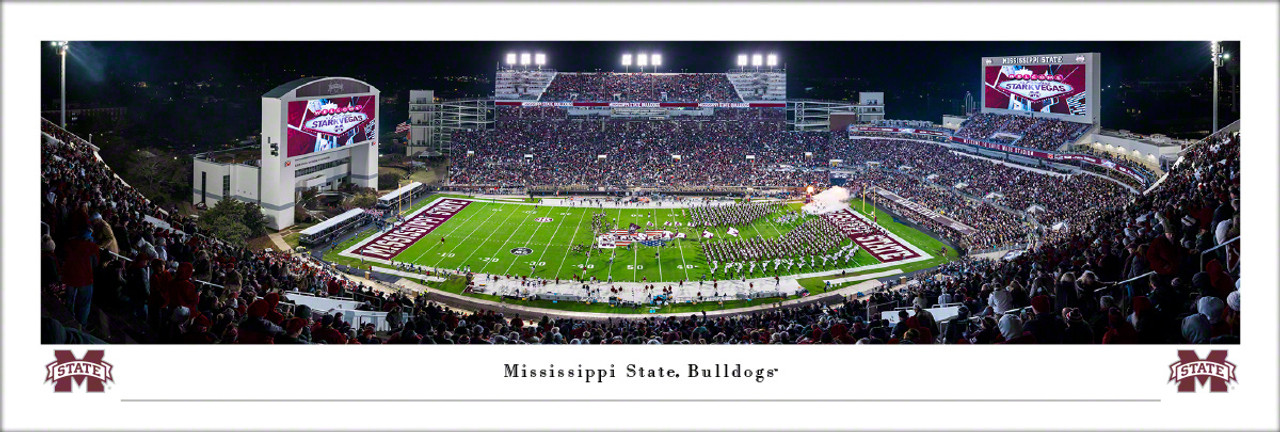
Scott Field, one of the oldest stadiums in Division-1 football, has served as the home of the Mississippi State Bulldogs for more than a century. The stadium opened in 1914, replacing Hardy Field, and was originally a modest facility with a seating capacity of fewer than 20,000. It was named in honor of Don Magruder Scott, an Olympic sprinter and one of Mississippi State’s earliest football stars.
As the popularity of Bulldogs football grew, so did the stadium. Major expansions in 1936 and 1945 increased Scott Field’s capacity to approximately 35,000. For the next several decades, the stadium remained largely unchanged. Prior to the 1983 season, seating in one end zone was removed, reducing capacity to about 32,000. The first significant renovation in more than 40 years was completed before the 1986 season. A $7.2 million expansion added nearly 9,000 seats, including an upper deck and additional seating along both sides of the east grandstand. Before the 1997 season, a new video scoreboard was installed in the north end zone. Another major transformation came in 2002 when donor Floyd Davis Wade helped fund a $30 million renovation that added approximately 7,000 upper-deck seats, 50 luxury suites, and 1,700 club seats. In recognition of his contribution, the facility was renamed Davis Wade Stadium at Scott Field.
In 2012, Mississippi State announced another major expansion to be completed before the 2014 season. Approximately 2,500 bleacher seats in the north end zone were removed and replaced with a new structure containing 7,000 bleacher seats and 1,500 club seats, increasing the stadium’s capacity to more than 61,000. The project also included a larger HD video board, expanded concourses, improved concession areas, and upgraded restroom facilities, further modernizing one of college football’s most historic venues.
Today, Davis Wade Stadium seats just over 61,000 fans. Double-deck grandstands line both sides of the field, while additional seating fills the end zone. The stadium also features one of the largest video boards in college football, measuring 111 feet wide by 47 feet tall in the north end zone. Between 1998 and 2000, Bulldogs fans watched Mississippi State compile a perfect home record as the team won 16 consecutive games at Scott Field.