
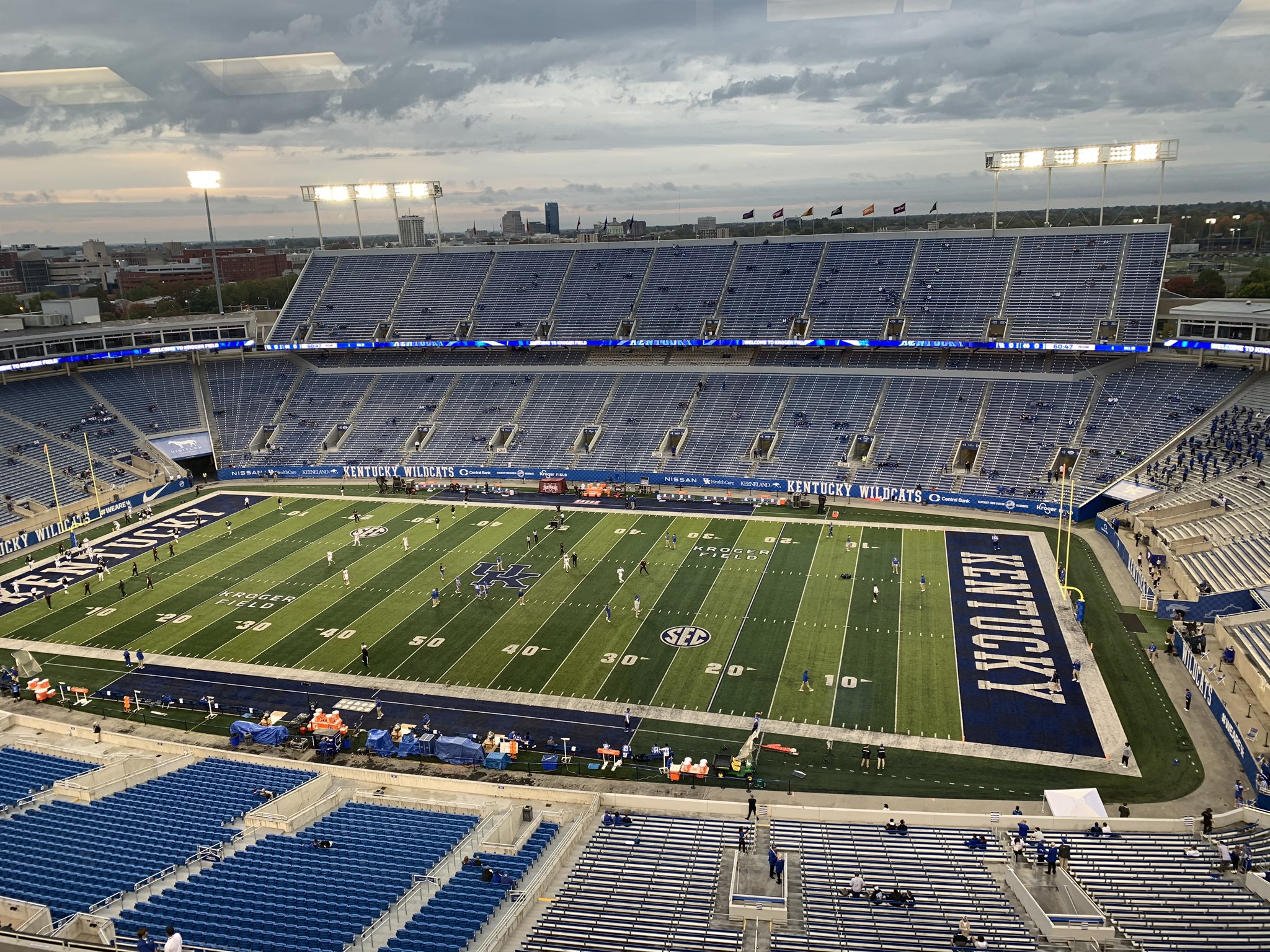
When most fans think of the University of Kentucky, they often think of its legendary basketball program. However, football has been a part of the Wildcats’ history since 1881. By the 1970s, after more than five decades at Stoll Field, the university determined that a new football stadium was needed to meet SEC stadium requirements. Because Stoll Field could not be expanded, Kentucky decided to construct a new stadium nearby.
Originally known as Commonwealth Stadium, the new facility opened on September 15, 1973, when the Wildcats defeated the Virginia Tech Hokies in the stadium’s inaugural game. Built at a cost of $12 million, the stadium originally seated 57,800 fans and provided Kentucky with a modern home for its football program. As interest in Wildcats football grew, the university expanded Commonwealth Stadium in the late 1990s. Before the 1999 season, both end zones were enclosed, and 40 luxury suites were added, increasing capacity to 67,600. Two LED HD video boards, each measuring 37 feet high by 80 feet wide, were later installed in both end zones to enhance the fan experience.
The stadium’s design features a lower seating bowl surrounding the playing field, with upper decks located on both sidelines. Luxury suites and the press box are positioned between the seating levels, providing premium amenities for fans and visitors.
In November 2013, the University of Kentucky announced a major renovation project designed to modernize the stadium and create a better game-day atmosphere. Completed before the 2015 season, the $110 million renovation reduced capacity to approximately 61,000 but added significant improvements. A multi-level structure was constructed on the south side of the stadium featuring a new press box, 28 luxury suites, and 2,300 club seats. Additional upgrades included a new team tunnel entrance and replacement of the stadium’s traditional light towers with lighting systems mounted along the stadium rim.
In May 2017, the university announced that it had sold the naming rights to Commonwealth Stadium to grocery retailer Kroger. The 12-year agreement provided Kentucky with $1.85 million annually and made the facility one of the few college football stadiums named after a corporate sponsor. The stadium officially became known as Kroger Field.

