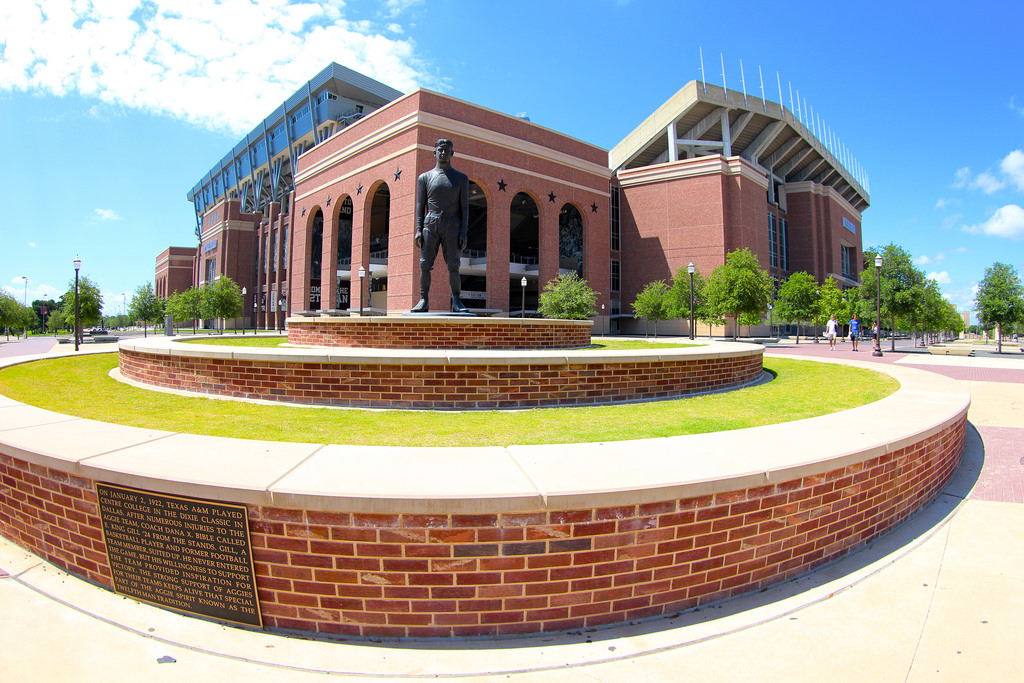
Don’t be surprised if you are greeted with a friendly “Howdy” or hear a conversation end with “Gig ’em” instead of goodbye. These are just two of the many traditions that represent the legendary Aggie Spirit at Texas A&M University. Many of Texas A&M’s traditions date back more than a century to when the university was founded as a rural military and agricultural institution. Although military training is no longer required, the school continues to embrace the values and traditions that shaped its identity. One of the most recognized traditions is the Aggies’ designation as the “12th Man,” symbolizing the student body’s commitment to supporting the 11 players on the field. During games, students traditionally stand for the entire contest, and when an injured player leaves the field, the student body steps down from the bleachers onto the concrete to show support. These traditions have helped create one of the most passionate and intimidating atmospheres in college football.
The history of Kyle Field dates back to the 1920s when the university began planning a new home for the Aggies football program. Constructed in two phases in 1927 and 1929, the stadium was named after Edwin J. Kyle, president of the athletic council and dean of agriculture, who played a major role in bringing the project to life. When it opened in 1929, Kyle Field featured a single-tier horseshoe-shaped grandstand surrounding the playing field and had a seating capacity of more than 32,000.
As fan support continued to grow, so did Kyle Field. The first major expansion was completed before the 1967 season when second decks were added along the east and west sides of the stadium. Additional expansion followed before the 1980 season with the construction of third decks, creating towering grandstands that overlooked the field. The original grass surface was replaced with Astroturf in 1970 before natural grass returned prior to the 1996 season.
A $32.9 million renovation and expansion project was completed before the 1999 season, dramatically changing the look of Kyle Field. The original north-side stands that created the horseshoe configuration were removed and replaced with a massive three-tier structure known as “The Zone.” This new section featured luxury suites, club seating, and the Texas A&M Sports Museum. The project increased capacity to 82,600 and created three large three-tier grandstands on the north, east, and west sides of the stadium.
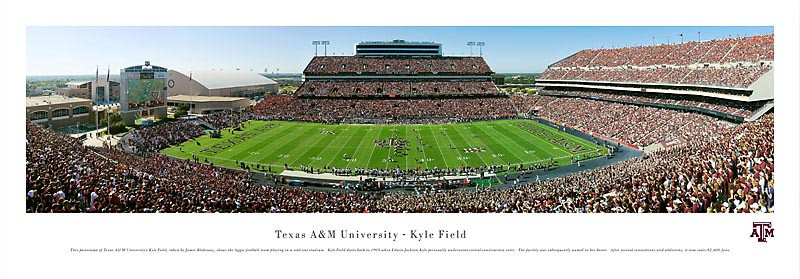
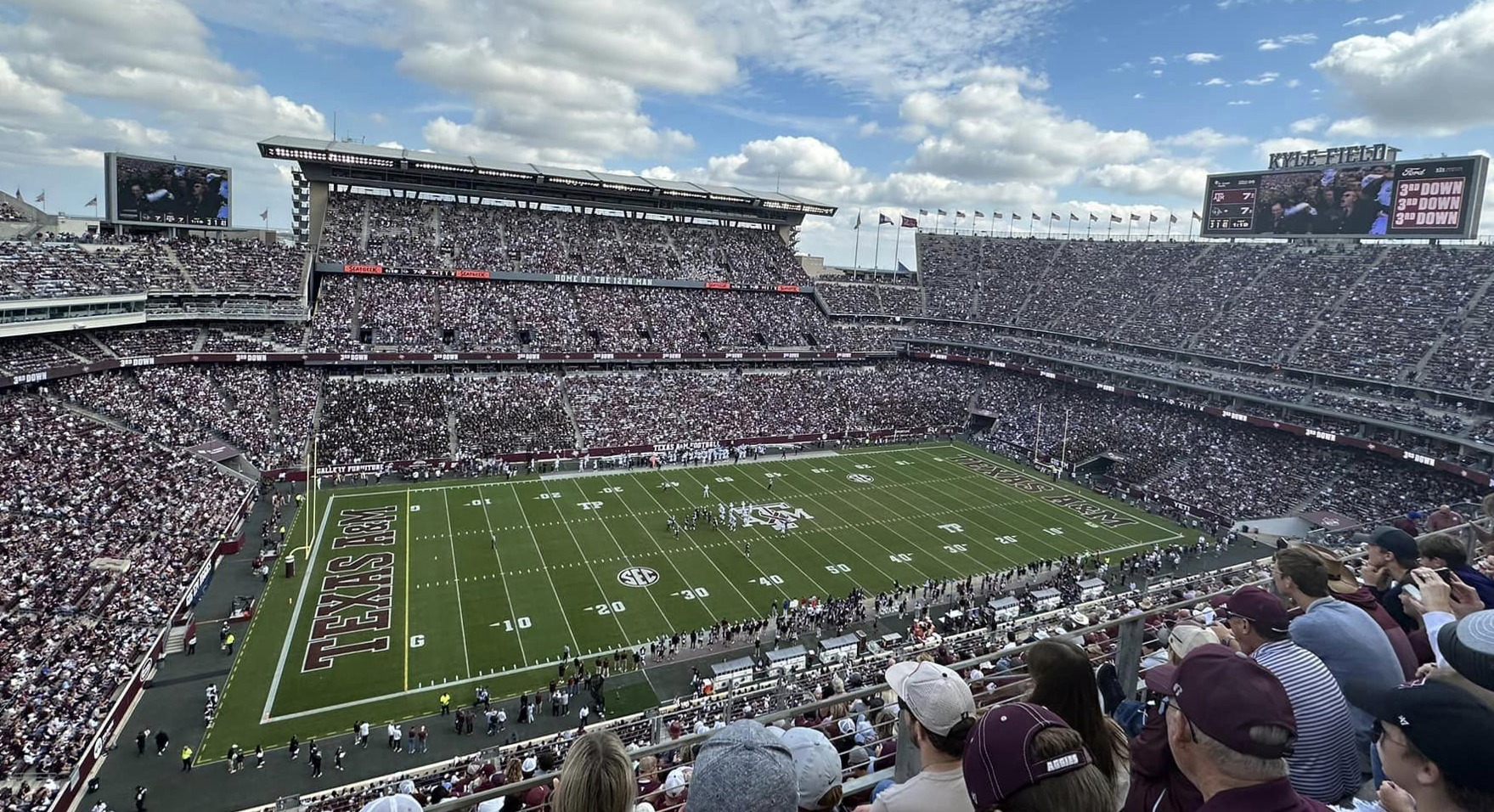
In February 2013, Texas A&M announced plans for one of the largest stadium expansion projects in college football history at the time. The $425 million renovation enclosed Kyle Field and increased capacity to 102,733, making it the largest stadium in the Southeastern Conference and one of the largest in the nation. The two-phase project was completed over two seasons. The first phase, completed before the 2014 season, included the demolition and reconstruction of the east side lower deck, the addition of a roof over the east upper deck, construction of the south end zone seating structure, and installation of one of the largest video boards in sports, measuring 47 feet high by 163 feet wide. The second phase, completed before the 2015 season, included the reconstruction of the west side of the stadium and completion of the south end zone expansion.
Today, Kyle Field stands as one of college football’s most recognizable and intimidating venues. Combined with the traditions, passion, and dedication of the Aggie faithful, the stadium continues to embody the spirit of Texas A&M football.