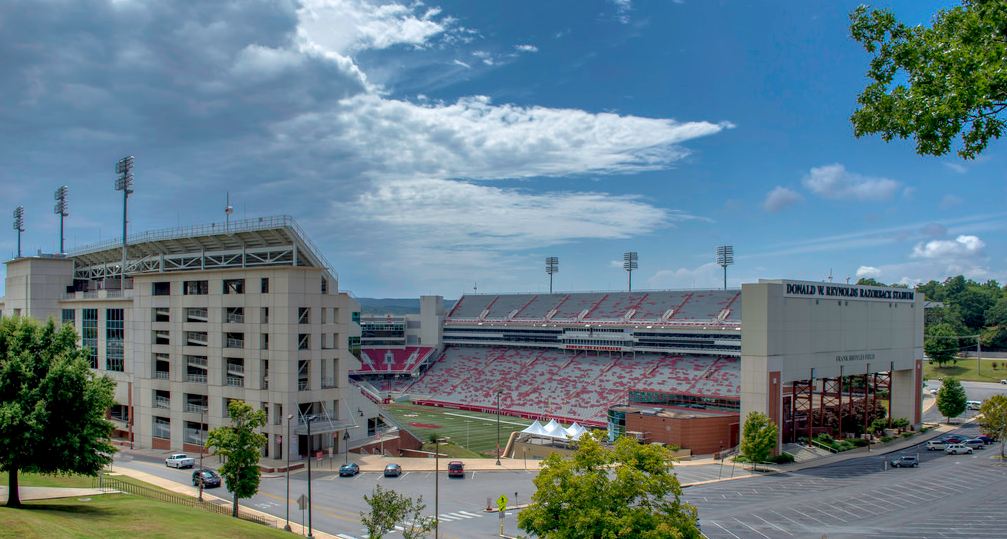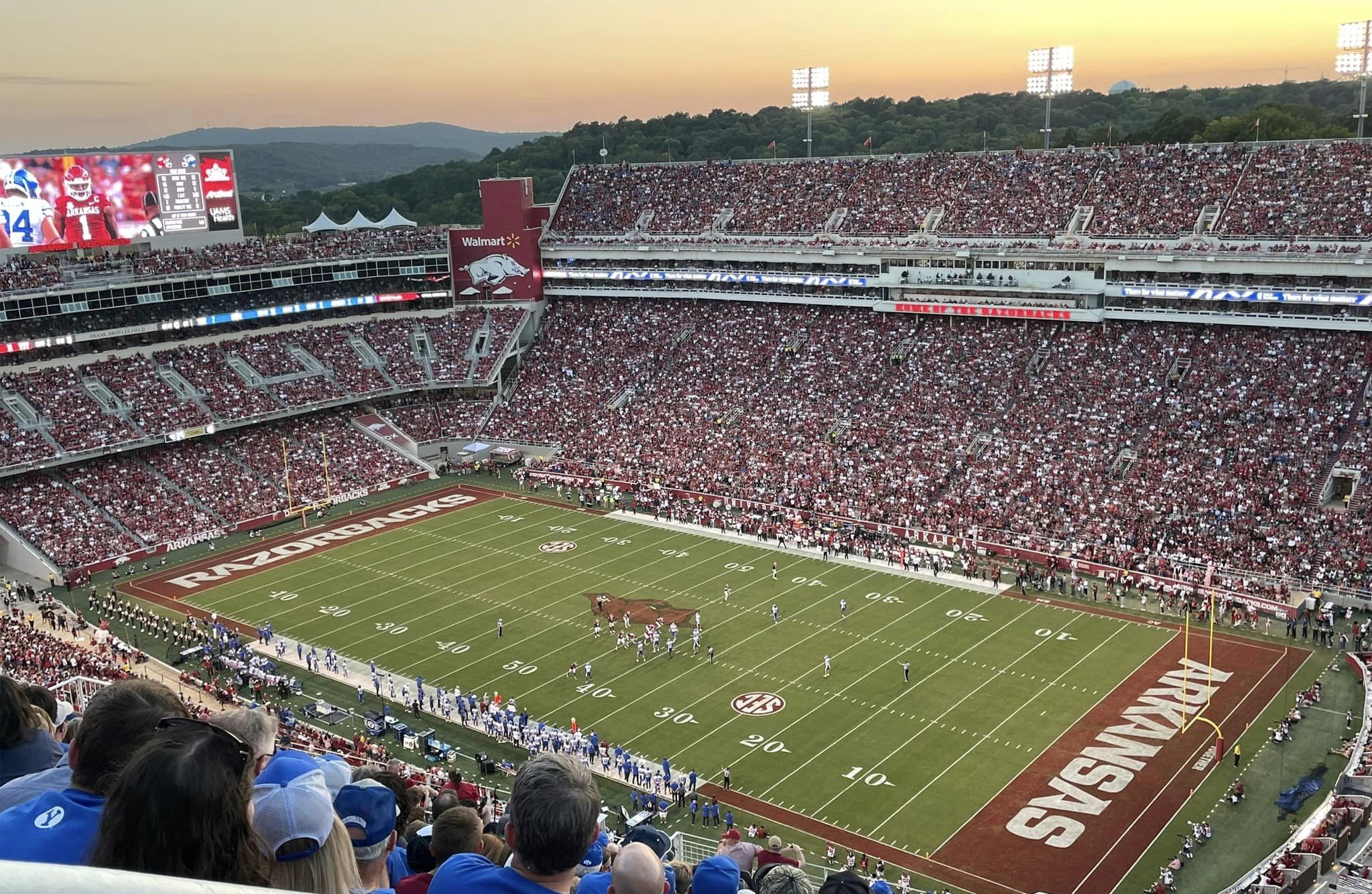
From the outside, Donald W. Reynolds Razorback Stadium looks like it could be the home of a professional football or baseball team. However, on any given Saturday during the fall, the thunderous roar echoing throughout the stadium comes from thousands of passionate fans gathered to watch the University of Arkansas Razorbacks.
Encased in brick and glass, Razorback Stadium has a modern appearance often associated with the newest stadiums in professional sports. These upgrades, along with numerous other improvements, were part of a $110 million renovation project completed before the 2001 season. The project transformed the stadium with a new exterior façade, expanded premium seating areas, additional luxury suites, an upgraded press box, and improved amenities throughout the facility.
A second major renovation was completed in 2018 as part of a $160 million reconstruction project. As part of the improvements, the Broyles Athletic Center was demolished, the north end zone was rebuilt, and 4,800 additional seats along with new premium seating areas were added. The project further enhanced the game-day experience while preserving the traditions and history that make Razorback Stadium special.
Throughout the stadium, fans can experience the rich history of Arkansas football. The eastern concourse showcases every conference championship banner and includes a tribute to the Razorbacks’ 1964 national championship. The western concourse celebrates every bowl game appearance in program history, while the south concourse honors each Razorback All-American. The stadium’s most recognizable feature is the massive video board above the north end zone, measuring 38 feet high by 167 feet wide.
Although Razorback Stadium looks like a modern sports venue today, its beginnings were much more modest. The original stadium opened in 1938 with a seating capacity of only 13,500, less than one-fifth of its current size. The Razorbacks played their first game at the facility on September 24, 1938, against Oklahoma A&M. Originally known as University Stadium, the facility was later renamed Bailey Stadium in honor of Arkansas Governor Carl Bailey before officially becoming Razorback Stadium in 1941.